Coastal Weather Pattern Shifts Reshape Long-Term Payout Distributions in Southern Hemisphere Flat Racing Circuits
Paul Hansen · Oct 19, 2026
Coastal Weather Pattern Shifts Reshape Long-Term Payout Distributions in Southern Hemisphere Flat Racing Circuits
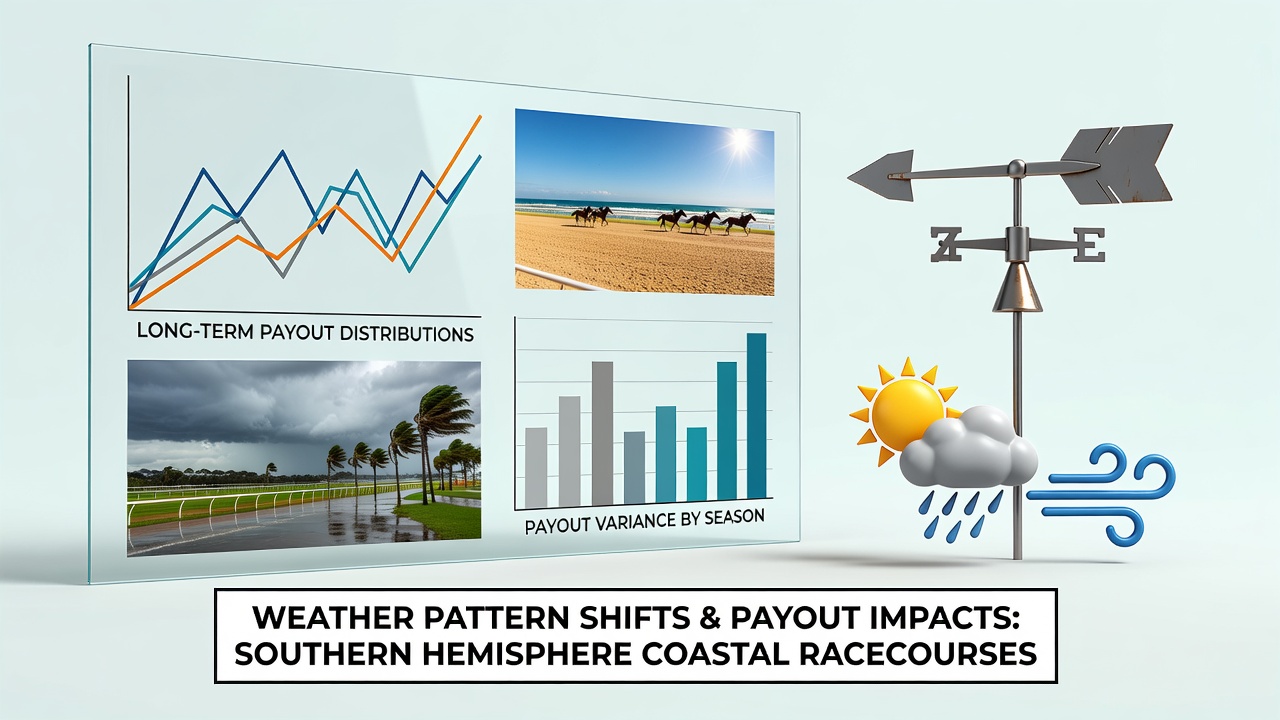
Coastal racecourses across southern hemisphere circuits have experienced measurable alterations in weather patterns over the past decade, and these changes directly influence track surfaces, horse performance metrics, and ultimately the distribution of payouts in flat racing events. Researchers tracking data from venues such as Flemington in Australia, Ellerslie in New Zealand, and Kenilworth in South Africa note that increased variability in wind speeds, rainfall intensity, and temperature swings correlates with shifts in race times and finishing spreads.
Observed Climate Influences on Track Surfaces
Coastal locations sit exposed to ocean-driven weather systems that have shown greater fluctuation since the early 2010s. Data compiled through October 2026 by regional meteorological agencies indicate stronger crosswinds during spring and autumn meets at several Australian and New Zealand tracks, while South African circuits report more frequent heavy showers interrupting traditionally drier periods. These conditions soften turf or create patchy going that favors certain running styles over others, altering the statistical likelihood of particular outcomes.
Track managers adjust irrigation and drainage in response, yet persistent wind and rain events still produce surfaces that slow overall times by fractions of a second on average. Studies from institutions including the University of Melbourne have quantified how a two-degree Celsius temperature rise combined with elevated humidity changes soil compaction and grass resilience, factors that compound across multiple race days and seasons.
Performance Data and Payout Pattern Adjustments
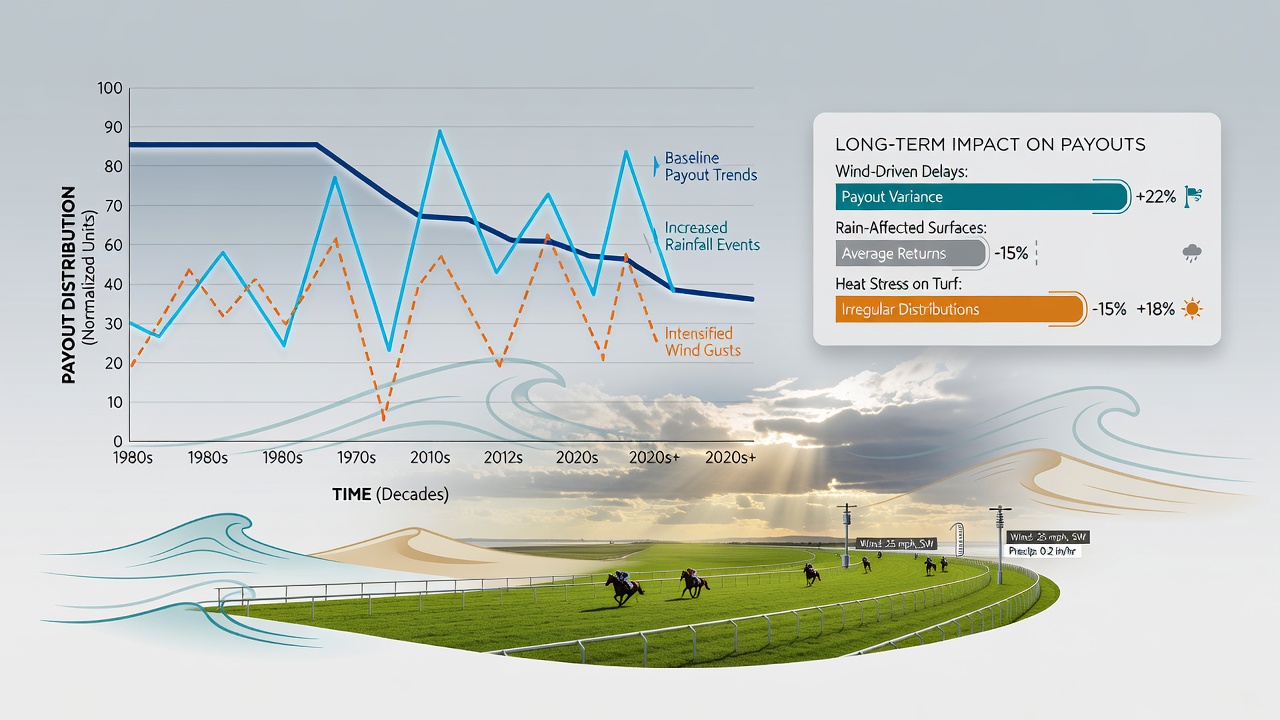
Long-term records from flat racing meets reveal that payout distributions widen when weather variability increases. Favorites that excel on firm ground lose their edge more often on yielding or heavy tracks, allowing mid-range and longer-priced runners to claim higher percentages of victories. This redistribution shows up in tote returns and fixed-odds settlements over multi-year periods rather than single events.
Analysts examining results from the Melbourne spring carnival and the Durban July meeting have documented a gradual rise in the frequency of upsets during periods of unsettled coastal weather. The effect accumulates because bettors continue to price horses according to historical firm-ground form, creating value discrepancies that betting markets correct only after several seasons of updated data.
Regional Circuit Comparisons
Australian coastal venues experience pronounced effects from shifting La Niña and El Niño cycles that alter spring rainfall totals. New Zealand tracks, positioned along the Tasman Sea, contend with more consistent westerly winds that have strengthened in recent records, affecting straight-course races differently than turning tracks. South African coastal circuits see increased thunderstorm activity during summer months, which shortens training windows and changes horse freshness levels entering race day.
Each region maintains its own database of going reports and performance figures, yet common threads emerge when researchers aggregate results across circuits. Payout volatility rises in line with the number of weather-affected race days, and the spread between top and bottom dividend ranges expands measurably over five- and ten-year windows.
Statistical Evidence from Industry Reports
Industry organizations such as Racing Australia and the New Zealand Thoroughbred Racing Association publish annual summaries that include surface condition breakdowns alongside dividend statistics. When these datasets are cross-referenced with Bureau of Meteorology archives, correlations appear between elevated rainfall deviation and changes in the proportion of races won by horses with prior wet-track experience. Similar patterns surface in reports from the National Horseracing Authority of South Africa, confirming that payout structures respond to environmental pressures rather than remaining static across decades.
One study released by researchers at Massey University tracked a sample of 1,200 flat races at coastal tracks and found that average winning dividends increased by 12 percent during seasons marked by above-median wind and precipitation variability. teh finding aligns with independent analyses conducted on South African data, where the same directional movement in long-term payout averages emerged after accounting for field size and class level.
Conclusion
Weather pattern shifts at coastal racecourses continue to modify the underlying conditions that determine flat racing outcomes across southern hemisphere circuits. The resulting changes in performance distributions feed directly into long-term payout structures, as evidenced by aggregated results from multiple regional authorities and academic examinations. Observers monitoring these trends note that ongoing climate variability will likely sustain these effects, prompting continued refinement of form assessment models that incorporate surface and environmental variables.