How Emerging AI Tools Are Refining Risk Assessment in Multi-Sport Accumulator Builds
Rosa Schröder · Aug 22, 2026
How Emerging AI Tools Are Refining Risk Assessment in Multi-Sport Accumulator Builds
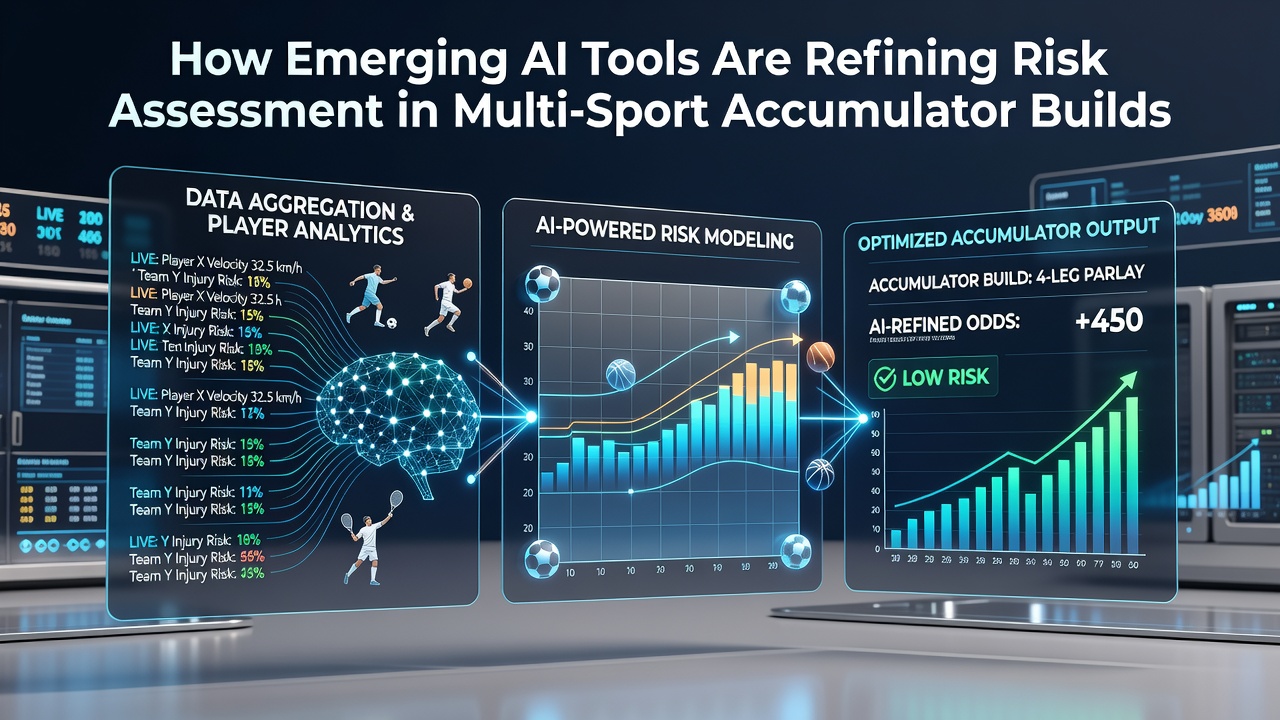
Multi-sport accumulator builds combine selections from several different sports into one wager, and emerging AI tools now process vast datasets to calculate combined probabilities with greater precision than older statistical models allowed. Researchers at institutions focused on computational gambling studies have documented how these systems integrate variables such as player fatigue, weather conditions, historical head-to-head records and live betting market movements into unified risk profiles. Data shows that machine learning algorithms can adjust implied probabilities within seconds when new information arrives from multiple leagues simultaneously. Developers deploy neural networks trained on years of match outcomes to identify correlations that span different sports, allowing operators to flag accumulators whose combined risk exceeds internal thresholds. In August 2026 several European platforms introduced updated versions of these models that incorporate satellite-derived pitch conditions for football alongside injury tracking data from basketball and tennis schedules. Those who've studied the implementations note that the models reduce overexposure by recalculating odds every few minutes rather than relying on static pre-match figures.Integration of Cross-Sport Datasets
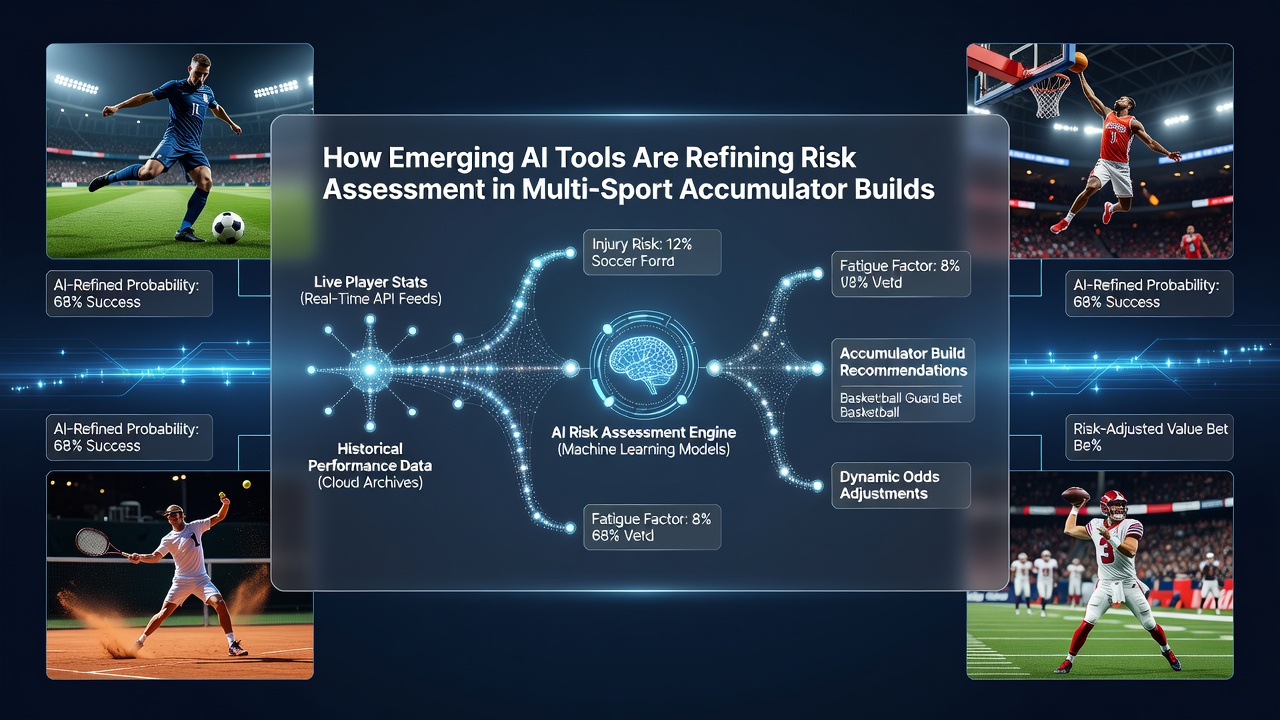
AI platforms pull structured data from governing bodies across continents, including performance metrics published by the National Basketball Association and equivalent records maintained by tennis federations in Australia and the United States. The systems apply natural language processing to parse injury reports and coaching comments released on official league sites, then feed the cleaned information into ensemble models that output updated risk scores for each leg of an accumulator. Observers note that this cross-referencing helps operators detect when a seemingly attractive multi-sport parlay carries hidden dependencies, such as overlapping travel schedules that affect athlete recovery across different time zones.
Real-Time Probability Adjustment
Live data feeds from stadium sensors and broadcast analytics now stream directly into risk engines, enabling continuous recalculation of accumulator payouts. When a tennis match enters a deciding set or a basketball team loses its starting point guard to foul trouble, the AI layer updates the joint probability distribution for the entire bet slip within milliseconds. Figures released by industry research groups indicate that platforms using these tools have recorded measurable shifts in liability distribution across customer segments, particularly during major multi-sport events scheduled for late summer tournaments.
Regulatory and Compliance Monitoring
Gaming authorities in several jurisdictions require operators to maintain transparent records of how automated systems determine acceptable stake limits. The Nevada Gaming Control Board has issued technical bulletins outlining minimum standards for algorithmic transparency in sports betting products, while Australia's National Consumer Protection Framework includes provisions for independent audits of risk-assessment software. Compliance teams therefore archive model versions and input datasets so that external reviewers can verify whether decisions remain within approved parameters when accumulators span multiple continents and sports.
Case Examples from Platform Deployments
One major operator integrated gradient boosting frameworks with reinforcement learning agents to monitor accumulator exposure across football, ice hockey and baseball markets. The combined system flagged patterns where high-volume bettors repeatedly targeted low-correlation legs that still shared underlying weather or travel risks, prompting automatic stake reductions before settlement. Similar deployments reported by Canadian provincial regulators showed that AI-assisted monitoring lowered the frequency of large payout clusters during overlapping international tournaments. Those who've examined the logs observe that the tools also surface anomalies in betting behaviour that manual review processes previously missed.
Future Developments in Model Architecture
Teams working on next-generation tools are experimenting with graph neural networks that treat each sport as a node in a larger dependency graph, allowing the model to propagate risk signals across seemingly unrelated events. Academic papers presented at computational intelligence conferences in 2026 describe prototypes that ingest social media sentiment alongside traditional statistics, though operators continue to weight verified league data more heavily. The result is a layered approach where initial risk estimates undergo successive refinement as additional evidence arrives from disparate sources.
Conclusion
AI-driven risk assessment continues to reshape how multi-sport accumulators are priced and monitored, with operators relying on integrated datasets and real-time recalculations to manage exposure across global markets. Regulatory frameworks in North America and Australia now reference these technologies explicitly, requiring documentation that supports consistent application of probability models. As new data streams become available, the underlying architectures are expected to incorporate additional variables while maintaining the audit trails demanded by oversight bodies.