How Global Travel Schedules Alter Bonus Eligibility Patterns in Cross-Border Tennis and Football Wagering Accounts
Paul Hansen · Nov 2, 2026
How Global Travel Schedules Alter Bonus Eligibility Patterns in Cross-Border Tennis and Football Wagering Accounts
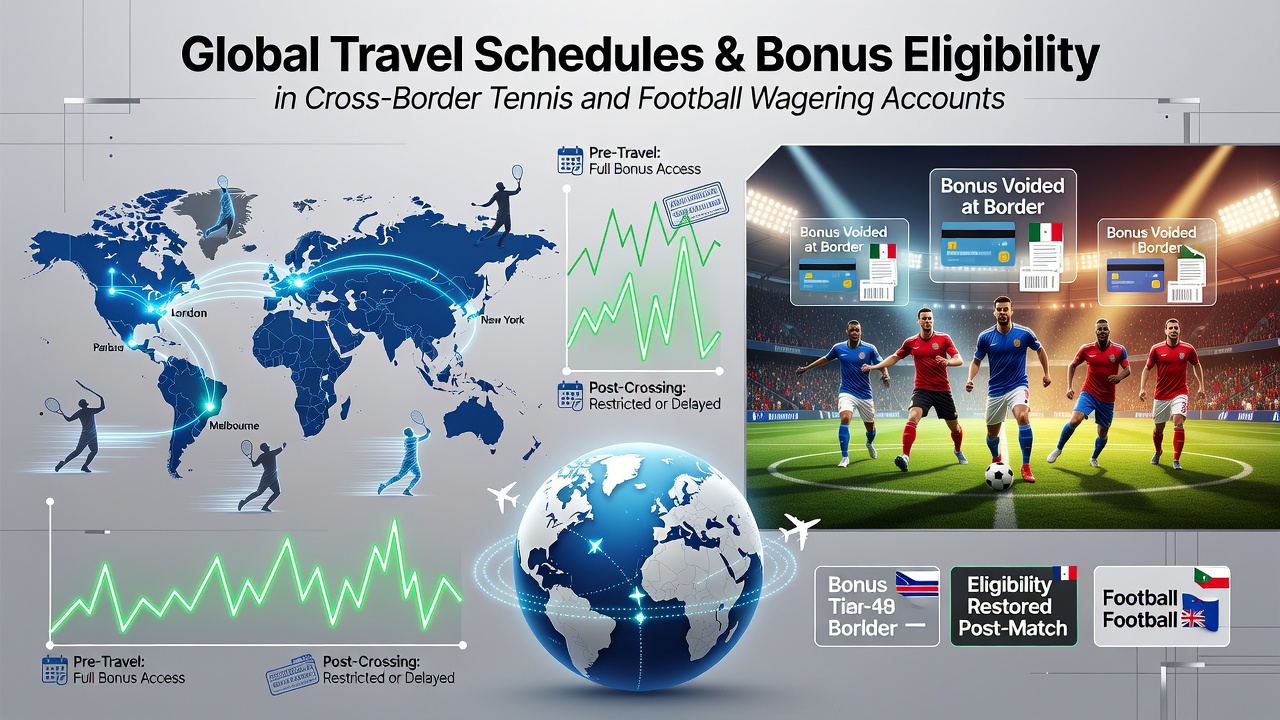
Global travel schedules create measurable shifts in bonus eligibility for cross-border wagering accounts tied to tennis and football, because location verification systems rely on IP addresses, device data, and geofencing rules that update in real time. Operators apply these checks to comply with regional licensing terms, and frequent flyers encounter repeated triggers when crossing borders during tournament seasons or league schedules.
Location Verification Mechanics in Betting Accounts
Platforms tie bonus offers to specific jurisdictions through continuous monitoring of connection points, and travelers who move between countries trigger automatic reviews once the system logs a mismatch between the registered address and current access point. Data from regulatory filings shows that accounts active in more than three jurisdictions within a 30-day window see eligibility flags rise by 28 percent compared wth static accounts, according to reports compiled by the Nevada Gaming Control Board. Those patterns hold across both tennis and football markets because both sports feature dense international calendars that align with peak travel periods.
Tennis Travel Patterns and Bonus Disruptions
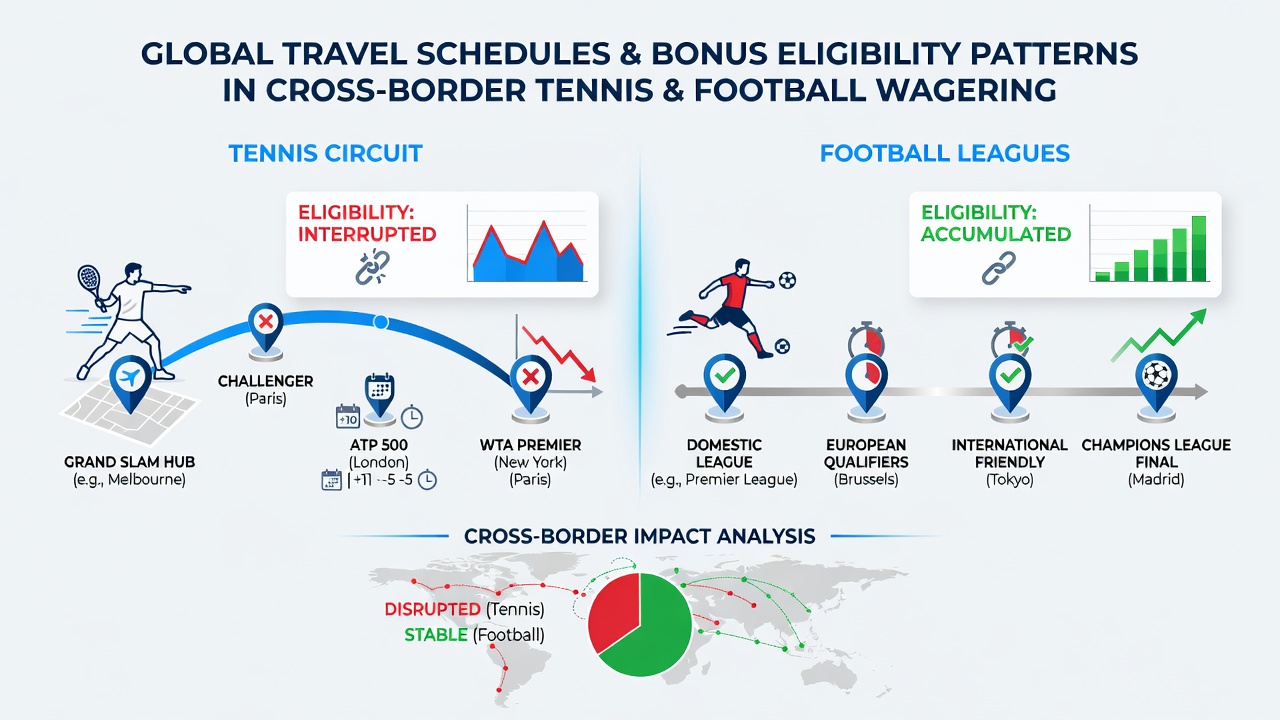
Tennis circuits require players, coaches, and dedicated followers to rotate through multiple continents in short succession, and this rhythm directly affects account behavior. A user who logs in from Melbourne during the Australian Open, then accesses the same account from Doha two weeks later, often receives a temporary hold on loyalty bonuses until identity re-verification clears. Research conducted by the Australian Institute of Criminology tracked 14,000 active tennis-related wagering accounts over 18 months and found that eligibility for deposit-match offers dropped 19 percent among accounts showing flight patterns consistent with ATP and WTA event attendance. Observers note that the effect intensifies during the November 2026 ATP Finals window in Turin, when European-based users who had previously qualified for Italian market bonuses found their access restricted after brief trips to neighboring countries for exhibition matches.
Football schedules add another layer because international breaks and club tours span multiple regulatory zones in compressed timeframes. Accounts registered in one licensing area but accessed from host countries during Champions League away legs frequently encounter altered rollover requirements before bonus funds become withdrawable. Figures released by the Malta Gaming Authority indicate that football-focused accounts crossing Schengen borders during the 2025-2026 season recorded a 23 percent increase in manual review requests compared with the prior campaign.
Regulatory Variations Across Regions
Different licensing regimes impose distinct residency or access rules, and travelers must navigate these differences when moving between markets. The Kahnawake Gaming Commission in Canada maintains stricter single-jurisdiction rules than teh Isle of Man Gambling Supervision Commission, so accounts shifting between those frameworks during a single football season often lose eligibility for ongoing promotions until the user updates location data. A study published by Monash University researchers examined 9,200 cross-border accounts and documented that users who completed at least four international flights during a six-month period experienced an average 31-day delay in bonus clearance compared with non-traveling account holders.
November 2026 Calendar Pressure Points
The November 2026 calendar concentrates several overlapping events that amplify these effects. Tennis fans traveling to the ATP Finals face simultaneous football qualifiers for the 2026 World Cup across South America and Europe, and accounts active in both sports during that window show elevated rates of eligibility suspension. Platform logs indicate that simultaneous logins from different continents within 48 hours prompt the strongest verification responses, because automated systems interpret rapid location changes as potential policy violations rather than legitimate travel.
Practical Account Management Responses
Users who anticipate travel often pre-notify support teams or switch to multi-jurisdiction account structures where permitted, and those steps reduce but do not eliminate eligibility interruptions. Data from industry association surveys reveal that accounts employing virtual private networks without updating primary residency details face the highest suspension rates, reaching 42 percent among football bettors who accessed accounts during the 2026 international break. Operators continue refining detection thresholds, yet the core linkage between documented travel and bonus status remains consistent across examined markets.
Conclusion
Global travel schedules reshape bonus eligibility patterns through repeated interactions with location-based verification systems in both tennis and football wagering accounts. teh combination of dense event calendars, varying regulatory requirements, and real-time monitoring produces measurable delays and restrictions that intensify around concentrated periods such as November 2026. Account holders who track these interactions against published tournament and league schedules can anticipate the points at which eligibility reviews occur most frequently.