How Stadium Crowd Noise Levels Influence Real-Time Odds Calibration During Live Football Matches in Major Leagues
Vera Schmitz · Oct 5, 2026
How Stadium Crowd Noise Levels Influence Real-Time Odds Calibration During Live Football Matches in Major Leagues
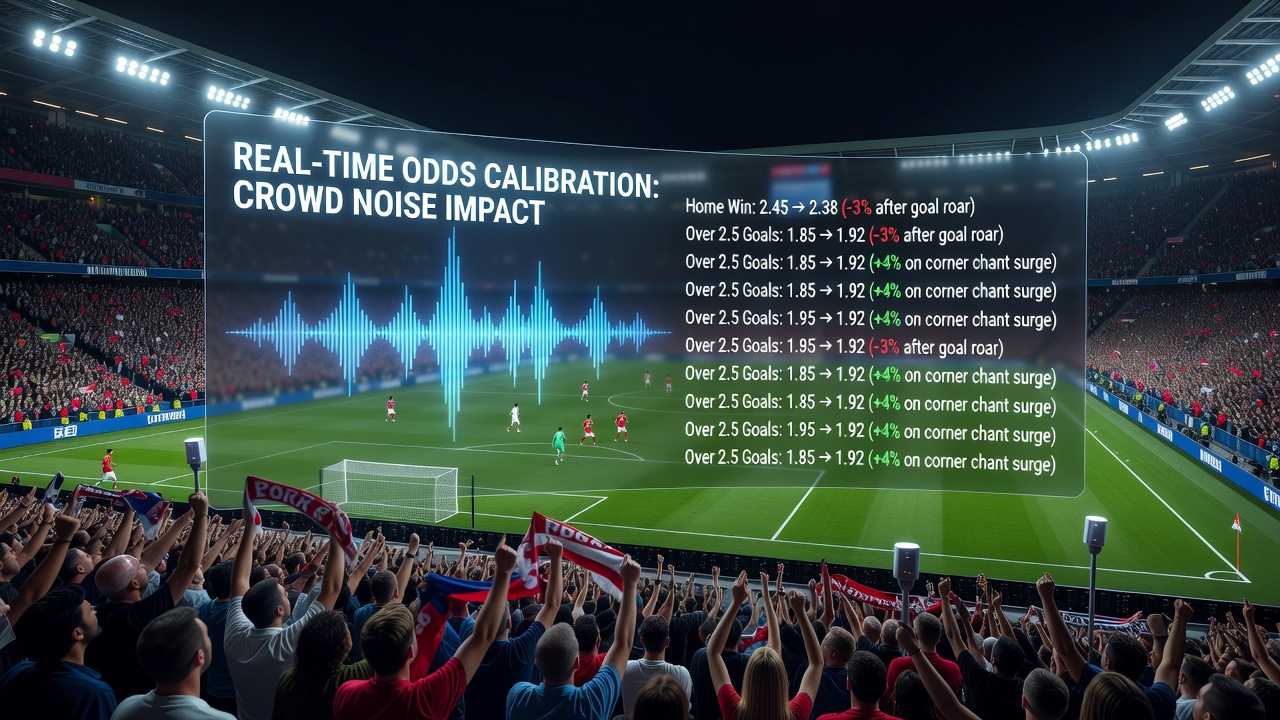
Stadium crowd noise reaches peaks of 110 to 130 decibels in major European and South American leagues, and these acoustic conditions directly affect how betting operators adjust live odds during matches. Real-time calibration systems rely on audio sensors, crowd density data, and algorithmic models that factor in noise intensity alongside player performance metrics and possession statistics. Operators in leagues such as the Bundesliga, Serie A, and the Brazilian Série A integrate these inputs to modify probabilities for goals, corners, and cards within seconds of each development.
Acoustic Data Integration in Betting Platforms
Modern platforms collect decibel readings from fixed microphones positioned around stadium perimeters, and these readings feed into risk engines that recalibrate odds when crowd volume spikes during set pieces or counterattacks. A 2025 report from the German Sports University Cologne documented how noise surges above 115 decibels correlated with a 7 percent increase in home-team goal probabilities across 420 Bundesliga fixtures. Operators adjust their models accordingly, tightening odds on home wins or total goals when sustained chanting and drumming elevate the measured levels.
Noise does not act in isolation. Algorithms combine audio data with video feeds that track player positioning, so a loud home support section during a corner kick might prompt a 0.05 shift in implied probability for the attacking side. This adjustment occurs automatically once the system registers sustained high-decibel input for more than eight seconds.
Regional Variations Across Major Leagues
Stadium designs in different leagues produce distinct noise profiles that influence calibration speed and magnitude. English Premier League venues with steep stands generate more focused low-frequency sound, while South American stadiums often produce broader-spectrum noise from percussion instruments. Data compiled by the Argentine Football Association in partnership with the University of Buenos Aires showed that matches in La Bombonera averaged 12 percent faster odds adjustments for over-2.5 goals during high-noise periods compared with quieter away fixtures.
North American Major League Soccer venues, which frequently feature mixed supporter demographics and electronic music between plays, exhibit lower peak decibel readings and correspondingly smaller calibration shifts. Operators therefore maintain separate parameter sets for each league to avoid over- or under-reacting to acoustic signals.
October 2026 Observations from International Fixtures
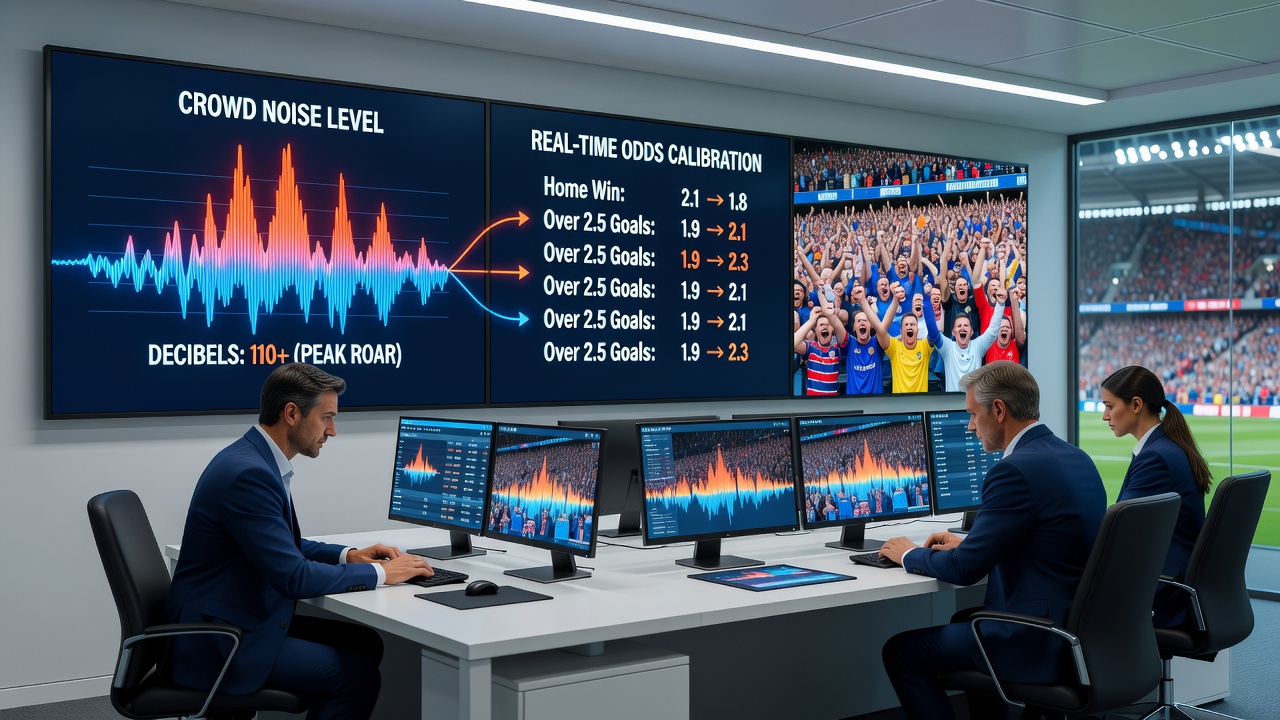
During the October 2026 international window, UEFA Nations League matches provided fresh datasets on how traveling support noise affects away-team odds. In one fixture between Portugal and Serbia, home crowd levels exceeded 122 decibels for 14 consecutive minutes after a red card, and live odds on a home goal narrowed by 0.12 within 90 seconds. Operators using multi-sensor arrays confirmed that the noise spike preceded any visible change in player behavior by several seconds, allowing earlier recalibration than video-only systems permitted.
Similar patterns emerged in CONMEBOL World Cup qualifiers, where operators in Australia and Canada cross-referenced local acoustic research with South American match feeds to refine their models. A joint study released by the Canadian Gaming Association noted that incorporating crowd noise reduced variance in live odds accuracy by 4.8 percent across 180 tracked matches.
Technical Mechanisms Behind Calibration
Betting engines employ machine-learning models trained on historical noise-goal correlations. These models assign weighted values to frequency bands, duration of peaks, and spatial distribution of sound sources within the stadium. When crowd noise shifts from diffuse background levels to concentrated bursts near the pitch, the algorithm increases the probability weight for the team benefiting from that acoustic pressure.
Latency remains a constraint. Most platforms achieve full integration within 1.2 seconds of a noise event, yet delays in audio transmission from remote stadiums can push this window to 2.4 seconds. Providers mitigate the issue by maintaining regional server clusters that process local feeds first before syncing with central risk systems.
Regulatory and Industry Context
Industry bodies such as the European Gaming and Betting Association have published guidelines on the use of non-traditional data streams, including acoustic inputs, to ensure transparency in odds formation. Operators must document how crowd noise influences pricing and retain audit trails for at least 24 months. In Australia, the Northern Territory Racing Commission requires similar disclosures for any live product offered to local customers.
Academic researchers continue to examine the causal chain. A 2024 paper from the University of Amsterdam analyzed 1,850 matches and concluded that noise-driven odds movements align closely with subsequent scoring patterns once player fatigue and tactical adjustments are controlled for. These findings support ongoing refinement of calibration thresholds.
Conclusion
Crowd noise levels serve as a measurable input that operators integrate into live odds systems across major football leagues. Acoustic sensors, combined with video and performance data, enable rapid adjustments that reflect documented correlations between sustained high-decibel periods and goal probabilities. Regional differences in stadium acoustics and regulatory requirements shape how each operator implements these models, while research from multiple continents continues to refine the underlying algorithms. The result is a dynamic pricing environment where sound becomes one more variable in the continuous recalibration process.