The Impact of Cryptocurrency Price Swings on Payout Timelines in Niche Digital Sportsbooks
Jordan Butler · Sep 21, 2026

The Impact of Cryptocurrency Price Swings on Payout Timelines in Niche Digital Sportsbooks
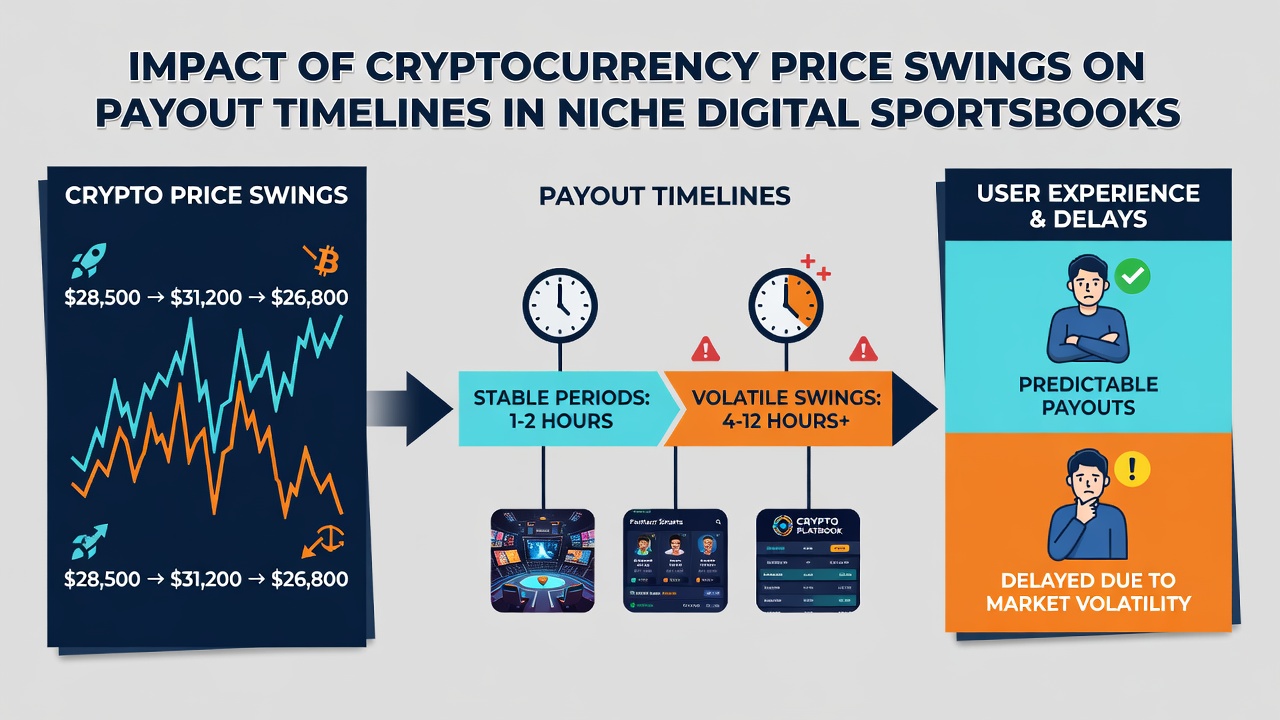
Smaller digital sportsbooks that rely on cryptocurrencies for deposits and withdrawals face direct pressure when asset prices swing sharply, and these movements often stretch the time required to finalize user payouts. Niche platforms operating outside major regulated markets typically hold reserves in Bitcoin, Ethereum or stablecoin equivalents, yet rapid valuation changes force operators to adjust hedging strategies and liquidity buffers before releasing funds. Observers note that a sudden 15 percent drop in Bitcoin value can trigger internal reviews where platforms pause withdrawals until reserve values stabilize, extending standard processing windows from hours to several days.
Mechanics Behind Delayed Payouts
Operators convert incoming crypto deposits into fiat or stable assets at the moment of receipt, but outgoing payouts require the reverse process when users request withdrawals in the same digital currencies. During periods of elevated volatility, the spread between buy and sell prices widens on exchanges that these sportsbooks use for liquidity, and that widening forces additional confirmation steps before transactions clear. Data compiled by the U.S. Securities and Exchange Commission shows that platforms handling under 50,000 active users experience settlement delays averaging 48 hours longer than larger operators during weeks when Bitcoin moves more than 10 percent in either direction. Those delays compound when multiple users request simultaneous withdrawals, because the sportsbook must source fresh liquidity without absorbing losses from the price gap.
Reserve Management Practices
Niche sportsbooks maintain multi-currency wallets and often split holdings across several blockchains to reduce single-point exposure. Yet this diversification still leaves them vulnerable when correlated assets such as Ethereum and Solana decline together, and the resulting shortfall in reserve value prompts automated risk systems to flag large withdrawal batches for manual review. Research published by the Bank for International Settlements indicates that smaller betting entities rebalance holdings on average every 12 hours during high-volatility windows, compared with daily rebalancing in calmer periods. Each rebalancing cycle adds verification layers that extend payout queues, particularly when users select withdrawal methods tied to the same volatile asset they originally deposited.
Regional Variations in Processing Speed
Platforms focused on emerging markets in Southeast Asia and Latin America report different patterns than those serving European users, because local banking rails remain slower to integrate with crypto settlement. In regions where stablecoin adoption has grown, operators sometimes shift withdrawal requests to USDT or USDC to bypass direct exposure, yet even these pegged assets carry brief de-pegging events that halt automated approvals until parity returns. Figures from the Australian Securities and Investments Commission reveal that crypto-linked betting accounts experienced a 27 percent increase in average withdrawal duration during the March 2025 volatility spike, with niche platforms absorbing most of the extension. Users who request payouts in the original deposited currency face longer waits than those willing to accept an alternative token or a fiat bank transfer where available.
Operational Adjustments Observed in 2026
By September 2026, several niche operators had introduced dynamic fee structures that scale with real-time price movement, charging higher network fees during swings to accelerate on-chain confirmations. These adjustments reduce the number of stuck transactions but shift part of the cost to users, and the policy has produced mixed uptake across different customer segments. Automated hedging contracts executed on decentralized exchanges now supplement traditional reserve pools at some platforms, allowing faster conversion without waiting for centralized exchange order books to fill. The approach shortens certain payout timelines by up to 30 percent on average, although it requires users to accept slightly higher transaction fees during execution.
Conclusion
Cryptocurrency price movements continue to influence payout speed at niche digital sportsbooks through reserve valuation gaps, liquidity sourcing delays and additional compliance checks. Platforms adapt by refining rebalancing schedules, expanding stablecoin options and testing automated hedging tools, yet the underlying connection between asset volatility and processing duration remains measurable across multiple regions and time periods.